












Fertility And Nutrition: The Non-Negotiables That Actually Matter
We asked a fertility nutritionist what really moves the needle, and what’s worth focusing on earlier than you think.

Geschrieben von: Samantha Nice
Geschrieben am: 7 May 2026
We’re talking about fertility more than ever, but there’s still a gap between what people know and what the science says. Today sees the launch of Wild Nutrition’s new research report The Fertility Disconnect, a landmark paper exploring the realities of our fertility landscape. Some of the findings are hard to ignore. Fifty-two percent of people trying to conceive required medical intervention, 76% aren’t getting enough omega-3, and 44% only improved their diet once they had already started trying.
At the same time, dietary patterns have shifted towards more ultra-processed foods, which are increasingly linked to inflammation and oxidative stress, both of which can affect reproductive health. Other research has also linked higher intake of ultra-processed foods to reduced fertility, especially in men, and poorer early pregnancy development, including slower embryonic growth.
For Wild Nutrition’s fertility nutritional therapist, Gail Madalena, BANT, CNHC, none of this is surprising, and the paper’s findings reflect what she sees in consultations every day. “It’s often not one single issue but a combination of factors: lower nutrient intake, higher stress, disrupted sleep, and a lack of awareness around what the body actually requires,” she says.
One of the biggest misconceptions around fertility nutrition sits at the starting point. “People often see this as a time of restriction, cutting out all the ‘good’ things,” she says. “But it’s really about balance and consistency, and focusing on what you can add in to nourish the body.”
Timing also plays a role here. “We often talk about a three-month preconception window, because that’s how long it takes for eggs and sperm to mature,” says Madalena. “But fertility isn’t only shaped in that short period. Lifestyle and nutrition over months and years all play a role.”
Taken together, it’s less about making sudden changes and more about building a way of eating and living that consistently supports your body.
The non-negotiables (what consistently makes a difference)
The best nutritional guidelines for fertility don’t lie in extremes or short-term changes, but in the fundamentals that repeatedly show up in both research and real consultations. “It’s often rarely about one single deficiency and more about a few key nutrients and lifestyle factors that tend to be consistently on the lower side,” says Madalena. “That’s what we’re trying to bring back into balance.”
Both The Fertility Disconnect and clinical practice point to the same core gaps:
- Low omega-3 intake
- Limited dietary variety and whole food intake
- High reliance on ultra-processed foods
- Poor sleep quality
- Ongoing, unmanaged stress
These are the areas that tend to matter most, and where it makes sense to start.
1. Increase food quality and variety rather than restricting
A more varied, whole-food-based diet increases exposure to the nutrients that directly support egg and sperm health, hormone production and cellular protection.
“We are creatures of habit and will often rotate the same meals week after week,” says Madalena. “Try to mix this up, include more variety and boost the level of wholefoods in your diet. These are rich in vitamins, minerals and antioxidants, which are fundamental for fertility and overall health.”
What this looks like day-to-day:
- Aim for 20–30 different plant foods per week, including vegetables, fruits, whole grains, legumes, nuts and seeds
- Build most meals around whole ingredients (for example protein + fibre + healthy fat), using ultra-processed foods more occasionally rather than as a base
- Rotate staples across the week instead of relying on the same 5–6 meals
- Add in nutrient-dense foods consistently rather than focusing on restriction
Diets lacking variety are more likely to fall short on key nutrients and protective compounds such as vitamins C and E, selenium, zinc, and plant polyphenols (found in foods like berries, olive oil, leafy greens and nuts). These help protect eggs and sperm from oxidative stress, which has been linked to reduced fertility outcomes.
2. Make omega-3 a consistent part of your intake
One of the clearest gaps highlighted in the report is omega-3 intake, with 76% of people not getting enough. Omega-3 fatty acids, particularly EPA and DHA, are key components of cell membranes, support hormone production and help regulate inflammation, all of which are central to reproductive health. “Omega-3 is absolutely crucial,” says Madalena. “There is strong scientific evidence to support omega-3’s role in egg health, improving egg quality and viability for conception.”
What this looks like in reality:
- Try to eat oily fish 2–3 times per week (such as salmon, mackerel, sardines)
- Add plant sources daily, like 1–2 tablespoons of chia or flaxseed, or a small handful of walnuts
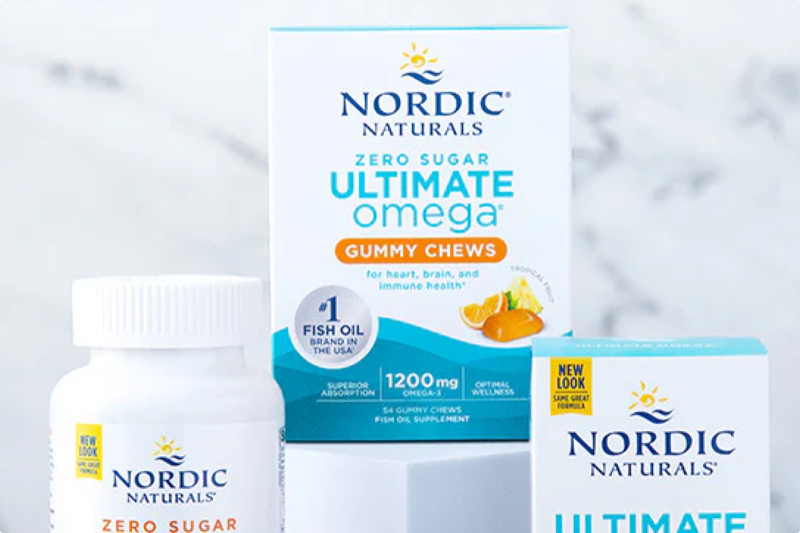
- If intake is low, consider a supplement providing 500–1000 mg combined EPA and DHA per day, in line with commonly used clinical ranges
- Look for ones that are third-party tested, high in EPA/DHA, and low in heavy metals
When omega-3 intake is low, inflammation tends to be higher and cell function less efficient, which can affect both egg and sperm quality over time.
3. Be more mindful of ultra-processed foods
This isn’t about removing foods entirely and more about what your diet is built around. “Diets high in ultra-processed foods can start to chip away at some of the key foundations we need for healthy fertility,” says Madalena. “One of the main things we see is increased inflammation and oxidative stress in the body.” Both processes can interfere with hormone signalling and damage reproductive cells.
Here’s what this tends to involve:
- Aiming for the majority of meals to be made from basic ingredients, even if simple
- Reducing the number of ultra-processed meals or snacks per day, rather than trying to eliminate them entirely
- Swapping where it’s straightforward (for example, home-cooked versions of ready meals or plain yoghurts with added fruit instead of flavoured yoghurts)
- Paying attention to patterns, not perfection
From a physiological perspective, diets high in UPFs are often lower in antioxidants and essential nutrients, higher in refined sugars and fats that can disrupt blood sugar, and are linked to lower sperm quality in men and longer time to conception in women. They also tend to displace foods that provide protective nutrients, like vitamins C and E, zinc, and selenium, which are important for egg and sperm integrity.
4. Treat sleep as part of your fertility strategy
Sleep underpins recovery, hormone regulation, and metabolic health, all of which feed directly into fertility. “So many people underestimate the power of sleep, but it’s fundamental to recovery and repair,” says Madalena. “We not only want to think about duration, but also the quality.”
Here are some useful pointers for improving sleep quality:
- Aiming for 7–9 hours of sleep every night
- Keeping sleep and wake times consistent across the week
- Reducing screen exposure at least 60 minutes before bed
- Creating a simple wind-down routine that supports relaxation
Poor sleep can disrupt hormone balance, increase stress hormones like cortisol, and affect how the body regulates blood sugar and energy, all of which can impact reproductive health over time.
5. Lower ongoing stress, not just obvious stress
Stress isn’t only relevant when it’s extreme. More often, it’s the low-level, constant pressure that has the biggest impact. “We live in a world where we have information and stimulation overload,” says Madalena. “Even a subtle level of consistent stress can have negative impacts on fertility.” That ongoing pressure can influence hormone signalling, ovulation, and sperm health.
If stress is a concern, build in small pockets of time where nothing is expected of you, even 20–30 minutes without screens, work or distractions. Pay attention to early signs like disrupted sleep, low energy or feeling constantly on edge, as these are often the first indicators that your baseline stress is too high. The goal isn’t to remove stress entirely, but to balance it with enough recovery that the body isn’t constantly operating under pressure.
6. Understand your body and don’t ignore changes
Fertility awareness doesn’t need to be complex, but it does require you to pay attention. “Information is power and we can learn so much about our reproductive health just from understanding our bodies a bit better,” says Madalena.
The more familiar you are with your own patterns, whether related to nutrition, sleep, or stress, the easier it is to spot when something changes. That could be changes in cycle length, more pronounced symptoms, or a general sense that things feel different to your usual baseline. These are often early signals that something is off balance. This could look like:
- Tracking or noting cycle length, regularity and symptoms over time
- Recognising what feels normal for you, rather than comparing externally
- Speaking to a GP earlier if something feels different or off
Catching those changes early gives you more time and more options. It allows for earlier testing, clearer answers, and more targeted support, rather than trying to piece things together later on.
Why this matters more than it might seem
Wild Nutrition’s report highlights a clear trend. Many people only start focusing on these areas once they are already trying to conceive, often under time pressure. At the same time, broader dietary patterns are moving in the opposite direction, with higher reliance on ultra-processed foods and lower intake of key nutrients.
“Fertility is really closely tied to overall metabolic health,” says Madalena. “It’s about how well the body is producing and using energy.” These habits aren’t separate from fertility. They directly influence the systems it depends on, from hormone balance to cell health.
Where nutrition fits if medical support is needed
For many, fertility treatment is part of the process. The report found that 52% required medical intervention. “IVF is incredibly powerful, but it’s also physically, emotionally and financially demanding,” says Madalena. Nutrition can play a big role in supporting the underlying biology needed for fertility. “A big part of success comes down to egg and sperm quality, and both are closely influenced by nutrition and lifestyle factors.”
Good nutrition is not an alternative to fertility treatment, but it helps ensure the body is as supported as possible going into it.
How much difference can it realistically make?
“It’s important to be clear that diet can’t override everything,” says Madalena. “Age, genetics, medical history and chance all play a part.” What it can do is improve the environment the body is working in by supporting hormone balance, inflammation levels, nutrient status, and egg and sperm quality. Rather than guaranteeing outcomes, nutrition is one of the factors that can improve the likelihood of a healthier reproductive response in the long run.
Where to start without overcomplicating it
If you’re looking for a starting point, these three areas are certainly worth your time and energy:
- Increase whole, nutrient-dense foods and variety
- Make omega-3 intake consistent or consider a supplement
- Reduce ultra-processed foods
Everything else builds from there. “With so much information circulating, it can feel overwhelming,” says Madalena. “But starting with your own body, what feels normal and what feels off, is often the most useful place.”
There’s also one final point that Madalena feels often gets overlooked. “Trying to conceive can already be an emotional and often stressful journey, so being kind to yourself along the way really matters,” she says.
It’s less about doing everything perfectly, and more about doing a few key things consistently.



Dieser Artikel dient ausschließlich Informationszwecken, auch wenn er Ratschläge von Ärzten und medizinischen Fachkräften enthält oder unabhängig davon, ob er solche enthält. Dieser Artikel ist kein Ersatz für professionelle medizinische Beratung, Diagnose oder Behandlung und ist auch nicht als solcher gedacht. Er sollte niemals als spezifischer medizinischer Rat herangezogen werden. Die in diesem Artikel geäußerten Ansichten sind die Ansichten des Experten und spiegeln nicht notwendigerweise die Ansichten von Healf wider.
Samantha Nice is a seasoned wellness writer with over a decade of experience crafting content for a diverse range of global brands. A passionate advocate for holistic wellbeing, she brings a particular focus to supplements, women’s health, strength training, and running. Samantha is a proud member of the Healf editorial team, where she merges her love for storytelling with industry insights and science-backed evidence.
An avid WHOOP wearer, keen runner (with a sub 1:30 half marathon) hot yoga enthusiast and regular gym goer, Samantha lives and breathes the wellness lifestyle she writes about. With a solid black book of trusted contacts (including some of the industry’s leading experts) she’s committed to creating accessible, well-informed content that empowers and inspires Healf readers.